
Attorney Luke Webster coauthors piece on Law of Armed Conflict
Writing for this month’s edition of the New Hampshire Bar News, Drummond Woodsum School Law Practice Group member and military attorney Luke Webster coauthored a piece analyzing how war crimes have impacted the political and military realities surrounding the conflict in Ukraine. 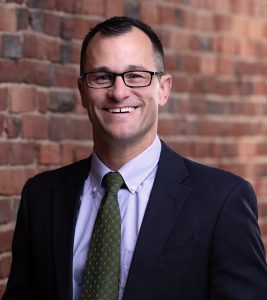
The piece, titled “The World is Still Watching: Ukraine and the Strategic Value of the Law of Armed Conflict Four Years Later,” serves as a follow up to a 2022 article, also penned by Webster and coauthor Ryan Ollis, that examined the practical challenges of holding Russian leaders accountable for violations of the Law of Armed Conflict (LOAC) related to the nation’s invasion of Ukraine. While the past four years have underscored the limited ability of the International Criminal Court and other international bodies to meaningfully sanction LOAC violators, Webster and Ollis argue Russia has nonetheless paid a price for its actions.
Drawing from historical military theorists like Thucydides and Carl von Clausewitz, the authors discuss how war crimes can undermine perpetrators’ military and political objectives by eroding the legitimacy of their operations and stirring up international support for their adversaries. That is especially true, the authors argue, in a world where any evidence of atrocities spreads rapidly through social media.
“Military operations perceived as legitimate are more likely to sustain domestic support, maintain coalition cohesion, and preserve diplomatic influence,” the piece reads. “Conversely, operations perceived as unlawful can generate strategic costs that far exceed any tactical gains.”
Webster and Ollis both serve as majors in the New Hampshire Army National Guard. In his decorated military career, Webster has deployed to the Middle East and trained in Europe, Africa, and South America.
Read the full story on page 35 of this month’s New Hampshire Bar News.